
Interview: Embracing GenAI in Banking to drive earnings growth
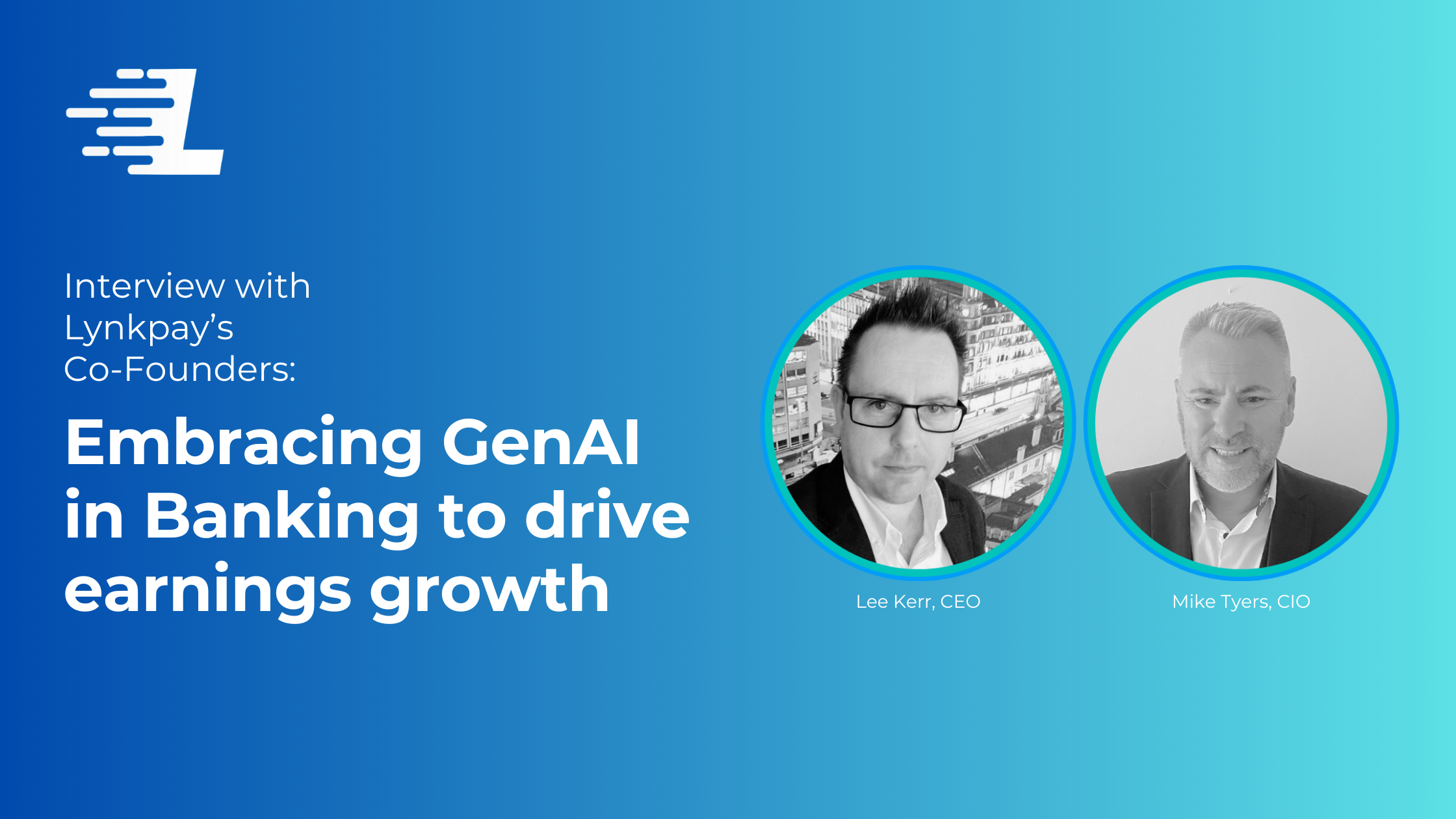
As the financial landscape evolves, banks are embracing generative AI to drive earnings growth, enhance decision-making processes, and mitigate risks. However, this transformative technology also introduces new challenges and considerations that must be carefully navigated. In this interview, Lynkpay Co-Founders, Lee Kerr (CEO) and Mike Tyers (CIO), delve into the incremental game-changing potential of AI in banking, exploring its impact, benefits, and potential implications for creditworthiness.
Q: How has AI adoption in Banking evolved?
Lee: “Historically, banks have been at the forefront of leveraging AI, primarily utilizing machine learning models to streamline operations, improve risk management, and drive profit growth. With the advent of generative AI, powered by sophisticated algorithms, banks are poised to usher in a new era of innovation and efficiency.”
Q: How is genAI reshaping the Banking industry?
Lee: “Generative AI promises to reshape the banking sector by offering new capabilities, revenue opportunities, and cost reductions. Unlike its predecessors, generative AI can analyze vast amounts of data across various formats, enabling the rapid creation of hyper-personalized products and services. Additionally, it has the potential to augment human abilities through AI chatbots and virtual assistants, revolutionizing customer interactions and service delivery.”
Q: What is the recommended path to AI adoption?
Mike: “While the potential of generative AI is immense, its widespread adoption will be gradual. Over the next two to five years, banks are expected to test and invest in AI models, focusing on incremental innovation and specific business needs. Human oversight will remain crucial to ensure accuracy, compliance, and performance.”
Q: What are the benefits, as well as the risks, of AI in Banking?
Lee: “Generative AI holds the promise of significant benefits for the banking sector, including improved productivity, cost reductions, and enhanced risk management. However, its adoption also raises concerns such as ethical considerations, security risks, and regulatory challenges. Banks must tread carefully to mitigate these risks and maximize the potential of AI.”
Q: What are the implications for creditworthiness?
Mike: “The successful deployment of AI strategies could have profound implications for banks' credit quality. By enhancing operational efficiencies, driving revenue growth, and improving risk management practices, AI has the potential to strengthen banks' competitive positions and profitability. However, poor deployment or regulatory non-compliance could lead to reputational damage and operational risks, affecting creditworthiness.”
Q: How can the sector best navigate multi-speed adoption?
Lee: “Not all banks will adopt AI at the same pace, with factors such as regulatory environment, investment capacity, and customer preferences influencing adoption rates. While transformative AI strategies hold immense potential, banks must carefully balance innovation with risk management to ensure sustainable growth and resilience.”
Q: Wrapping this up, what are your final thoughts on what the future holds for AI in banking?
Mike: “As the banking industry embarks on its AI journey, the path forward is filled with both opportunities and challenges. By harnessing the power of generative AI responsibly and strategically, banks can unlock new levels of innovation, efficiency, and competitiveness. The future of banking is AI-driven, so banks need to adapt and evolve in this rapidly changing landscape.”